Free Quote
Contact us today for your Free Quote
If you’ve ever wondered why a plastic bottle is widely recycled, but a crisp packet or black takeaway tray often isn’t, you’re not alone. The short answer is that “plastic” is not one material. It’s a wide family of polymers with different melting points, densities, additives, colours, and formats, and recycling systems are built to handle some far better than others. Plastic recycling is often talked about as a simple yes-or-no issue. In reality, recyclability sits on a spectrum. Some plastics are widely recycled and turned back into new products, while others are difficult, costly, or currently impractical to recycle at scale.
In the UK, this distinction matters. Around 2.3 million tonnes of plastic packaging are placed on the market each year, and while recycling rates have improved, only around 51% of plastic packaging is recycled or recovered. The rest is typically sent to energy recovery or disposal routes. That’s progress, but it also highlights a reality: around half still doesn’t become new plastic again, and “hard-to-recycle” formats are a big part of the reason.
So why do some plastics recycle easily while others don’t? The answer lies in material chemistry, product design, contamination, and the realities of recycling infrastructure.
1) Plastic is not one material
The word “plastic” covers a wide range of polymers, each with different properties. These are identified by resin identification codes (the numbers inside the recycling triangle).
Some polymers are far easier to recycle because they:
- Melt at predictable temperatures
- Can be sorted accurately
- Have strong end-markets for recycled material
Generally easier to recycle in the UK:
- PET (1) – drinks bottles and some food trays
- HDPE (2) – milk bottles and detergent containers
- PP (5) – tubs, pots and caps
These plastics benefit from established collection systems and consistent demand from reprocessors.
Other plastics, such as PVC (3), polystyrene (6) or mixed “other” plastics (7), are harder to manage due to additives, density, or limited market demand. When different polymers are mixed together, the quality of recycled output drops significantly.
2) Packaging design can matter more than material choice
One of the biggest barriers to recycling is multi-layer and composite packaging.
To extend shelf life, improve durability, or reduce weight, many products combine multiple layers of plastic or bond plastic with aluminium or paper. These formats are extremely difficult to separate mechanically, which is how most UK recycling facilities operate.
Recycling systems are most effective when materials are clean, consistent and made from a single polymer. Sector insight highlights that mechanical recycling relies on predictable material behaviour, which becomes far more difficult when packaging combines multiple layers or materials. When plastics are designed primarily for performance rather than end-of-life recovery, even well-established recycling infrastructure can struggle to process them efficiently.
This is why packaging design plays such a critical role in determining whether plastic is recycled in practice, not just in theory.
3) Flexible plastics and films create operational challenges
Flexible plastics introduce practical problems at sorting facilities. They can:
- Tangle in machinery
- Be misidentified by sorting equipment
- Contain multiple polymer layers
From an operational perspective, hard-to-recycle plastics often create challenges long before reprocessing begins. Waste-management specialists consistently point to issues such as complex material composition, contamination, and higher processing costs as key barriers to successful recycling. Flexible and composite plastics, in particular, require more intensive handling and are more likely to be rejected if quality standards are not met.
Improving segregation at source remains one of the most effective ways for organisations to increase recycling performance and reduce the risk of material being diverted away from recycling altogether.
4) Colour, additives, labels and glue can stop “good” plastic becoming good recyclate
Even within a single polymer type, packaging can contain lots of extras:
- Colour pigments
- UV stabilisers
- Flame retardants
- Fillers
- Adhesives
- Sleeves and labels
These can reduce the quality of the recycled plastic, limit the applications it can be used for, or create contamination issues.
Why black plastic has been a big issue
Black plastic has been a known UK sorting challenge because traditional carbon-black pigments can make packaging hard for near-infrared (NIR) sorting systems to detect, meaning it can be missed or incorrectly sorted
The key takeaway is simple: even if the polymer is recyclable, design choices like colour and label materials can make it far harder to recover at scale.
5) Contamination is a deal-breaker
Contamination is one of the most common reasons plastic fails to recycle, even when the material itself is “easy”.
Typical causes:
- Food residue (especially oils and sauces)
- Liquids left in containers
- Items put in the wrong bin
- Non-recyclables mixed into recycling
For businesses, contamination can have a direct cost impact. If recycling loads are rejected, they can be diverted to general waste treatment routes instead.
6) UK infrastructure and end markets play a major role
Even with perfect design and perfect sorting, recycling must still be economically viable.
In the UK, packaging waste overall is substantial, and recycling performance varies by material. Defra’s UK waste data reports provisional figures for 2024 suggesting between 64.1% and 75.2% of UK packaging waste overall was recycled (across all materials). Plastic packaging, specifically, has a lower rate, with recent summaries citing around 51% recycled or recovered in 2024 based on Defra’s dataset.
Why the gap?
- Recycling different polymers requires different equipment and processes
- Some plastics have weaker end markets, so there’s less financial incentive to collect and process them
- Collection rules vary locally, which impacts what arrives at facilities in the first place
- Capacity and technology are improving, but investment takes time (the UK is seeing new projects aimed at “closed loop” recycling, particularly for PET trays).
This is also why you’ll see confusion around “recyclable” labelling. What’s accepted can differ by region and by the contracts used by local authorities or waste providers.
What this means for businesses
For organisations generating waste or placing packaging on the market, hard-to-recycle plastics are not just an environmental issue. They affect:
- Waste management costs
- Recycling performance and reporting
- Compliance with evolving UK packaging policy
- Brand and stakeholder expectations
With policy mechanisms such as Extended Producer Responsibility linking costs more closely to packaging recyclability, understanding these issues is becoming increasingly important.
Practical steps to improve recyclability (and reduce waste costs)
- Carry out a waste audit
Understand which plastics you generate, where contamination occurs, and which materials are causing the biggest problems. - Improve segregation at source
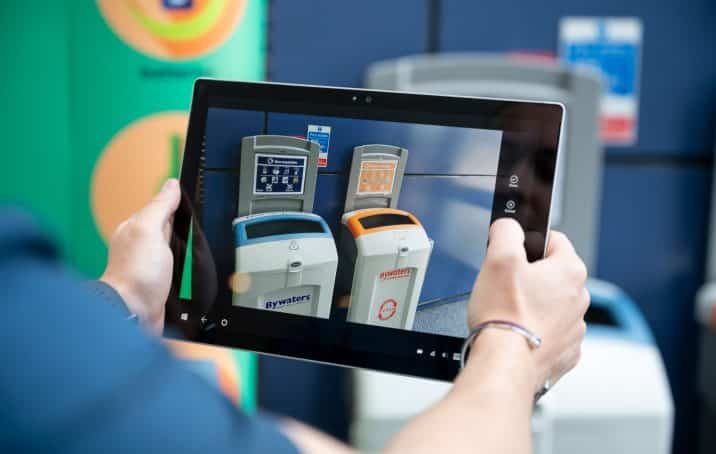
Clear bin signage, consistent layouts and staff training can significantly reduce contamination and increase recycling rates. - Review packaging and procurement choices
Where possible, prioritise mono-material packaging, avoid unnecessary composite layers, and consider colour and labelling choices. - Standardise across sites
Creating approved packaging and waste-handling guidelines helps maintain consistency and improve outcomes across multiple locations. - Measure and refine
Track contamination rates, recycling capture, and residual waste volumes to identify where changes deliver the greatest impact.
Conclusion
Some plastics are harder to recycle because they were never designed with real-world recycling systems in mind. Others fail due to contamination, complex material combinations, or limitations within current collection and processing infrastructure.
For businesses, improving plastic recycling outcomes starts with understanding what happens after materials leave site. By making informed choices around packaging design, improving segregation at source, and reviewing waste streams regularly, organisations can reduce waste costs, improve recycling performance, and support the transition to a more circular economy.
In many cases, relatively small changes applied consistently can deliver meaningful environmental and operational benefits.
More posts:

Tips to Secure Your Bins & Avoid Damage Charges
Properly positioning and handling your Bywaters bins can help prevent damage, reduce the risk of fly-tipping and keep your waste collection area safe and accessible.
Read more
Community Solutions For Drought Resilience: How Working Together Can Secure Our Water
Discover how communities can build drought resilience through water conservation, sustainable landscaping, education, and local partnerships.
Read more
Reducing Your Water Footprint Beyond The Tap: Simple Ways To Save Water During A Drought
At Bywaters, we put sustainability first, assisting organisations. Reducing hidden water use helps protect water resources, supports ecosystems, and ensures there is enough water for communities and agriculture.
Read more
Share: