Free Quote
Contact us today for your Free Quote
How Cutting Food Waste and Eating More Plantbased Shrinks Your Carbon Footprint.
Every day, perfectly good food in the UK ends up in the bin, at Bywaters, we see the end of that journey up close with bins full of food that was grown, transported, packaged and paid for but never eaten. The good news is that the choices we make at the start of the food cycle can dramatically change what arrives at the end.
The scale of food waste in the UK
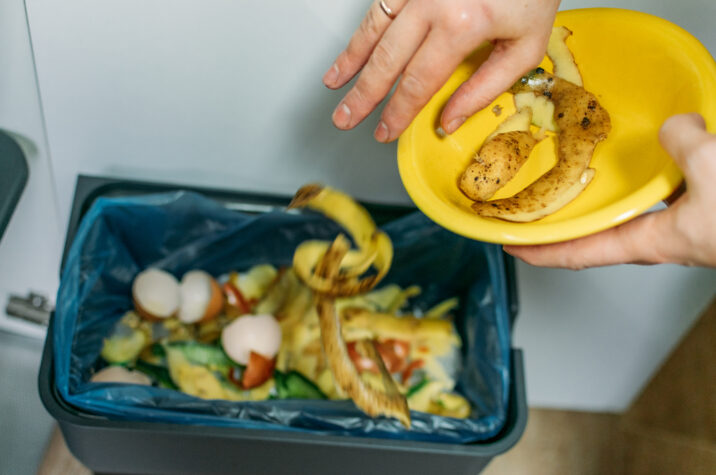
The United Kingdom wastes approximately 10.2 million tonnes of food every year. According to WRAP, the UK’s waste and resources charity, households are responsible for the largest share of food waste after it leaves the farm and a large proportion of that is food we could have eaten.
When food is thrown away, we waste more than the meal itself. We waste the land, water, energy, fuel and packaging used to produce it. And if that food ends up in landfill, it breaks down without oxygen and releases methane, a greenhouse gas far more potent than carbon dioxide over the short term.
These harmful greenhouse gas emissions, approximately the equivalent of 16 million tonnes of carbon dioxide cost an estimated £19 billion per year across the entire supply chain.
Following the food cycle
The carbon cost of food is built up at every stage:
- Production: Farming, especially livestock, uses land, feed, fertiliser and energy and produces emissions such as methane from cattle and nitrous oxide from soils.
- Processing and packaging: Factories, refrigeration and packaging all add to the total.
- Transport and retail: Food travels, often chilled, before it reaches the shelf.
- The End user: Households account for approximately 60% of all food waste in the UK, representing 6.4 million tonnes annually. While food service providers discard approximately 920,000 tonnes of food annually.
- Disposal: Over-buying, confusing date labels and forgotten leftovers turn good food into waste. Food that is binned rather than eaten or recycled releases emissions on top of everything already spent making it.
The earlier in this cycle we act, the bigger the saving.
Where veganism fits in
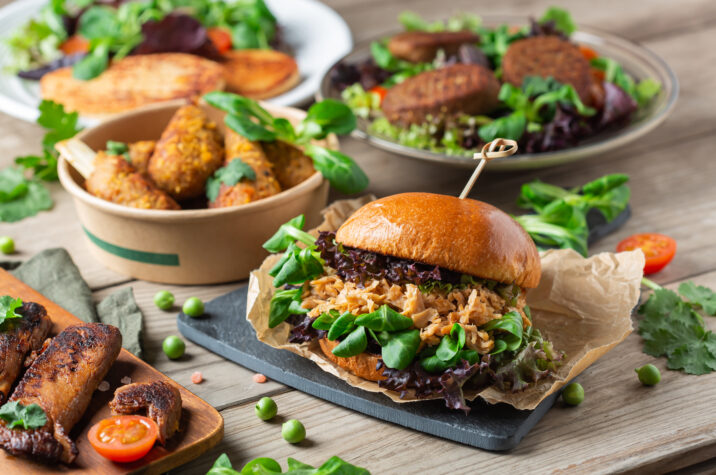
Not all food has the same footprint. Research has found that animal products, particularly beef and lamb, generally have a much higher greenhouse gas footprint per kilo or per calorie than plant foods such as vegetables, pulses, grains and nuts. The study estimated that moving to a plant-based diet could substantially reduce an individual’s food-related emissions and free up large amounts of farmland.
This matters for food waste too, because discarding “high-footprint” food wastes more carbon. Binning a portion of meat or dairy throws away far more embedded emissions than binning the same weight of vegetables or lentils.
A plant-based diet can also support less waste in practical ways:
- Longer-lasting staples: Dried pulses, tinned beans, rice, pasta and frozen veg keep for months.
- Less risk with raw ingredients: There is less worry about the short use-by windows and food safety concerns that often lead to meat and fish being thrown away “to be safe”.
- Scraps with a second life: Veg peelings, stalks and tops make excellent stock, and wilting veg is ideal for soups, curries and stir-fries.
You do not have to go fully vegan to make a difference. Even swapping a few meat-based meals a week for plant-based ones lowers your footprint and every meal counts.
Simple steps you can take
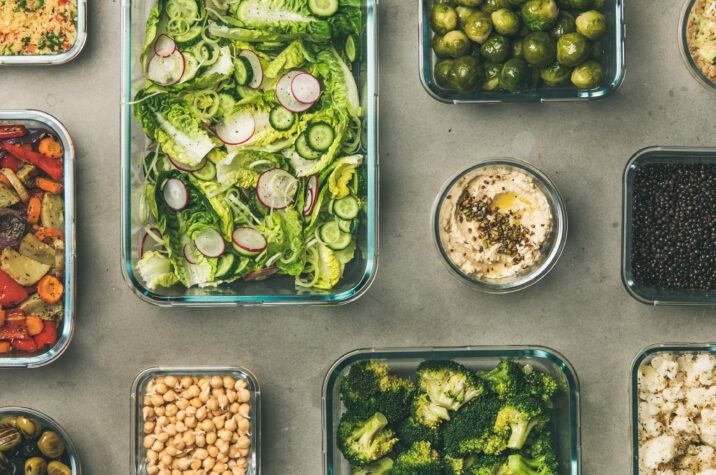
- Plan your meals and shop with a list to avoid over-buying.
- Learn your labels. “Best before” is about quality, not safety. “Use by” is the one to watch.
- Cook plant-based meals more often, starting with one or two nights a week.
- Freeze it. Bread, cooked rice, fruit and batch-cooked meals all freeze well.
- Use what you have. Make a “eat me first” shelf in the fridge for items nearing their date.
- Compost or use your food waste caddy for unavoidable scraps, so they are recycled into compost or renewable energy rather than sent to landfill.
What happens to food waste we collect
To recycle your food waste effectively, we send it – along with other sorts of biodegradable waste – for anaerobic digestion (AD) at a partner facility. This method saves between 0.5 and 1 tonne of CO2 from entering the atmosphere per tonne of food waste diverted. Keeping food waste out of general rubbish and out of landfill is one of the simplest ways households and businesses can reduce their emissions.
Reduce, reuse, recycle, in that order
Recycling food waste is far better than landfill, but the best outcome is that food never becomes waste. Not all biodegradable waste is suitable for anaerobic digestion, and we dispose of this waste sustainably through composting.
Eating more plants, buying only what you need and using what you buy gets you most of the way there.
We would love to help you do your part, at Bywaters our vision is to lead the UK to a more sustainable future. If like us, you’re passionate about promoting more environmentally friendly ways of living, we’d like to hear from you.
More posts:
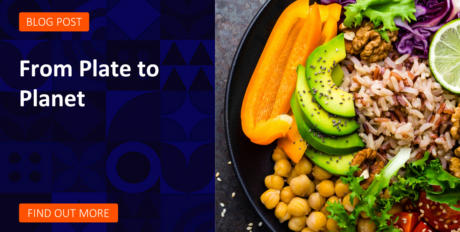
From Plate to Planet
Discover how a plant-based approach can assist the food cycle from farm to bin, alongside smarter habits that can cut your carbon footprint.
Read more
The Ultimate Guide for A Sustainable Halloween
The UK spends nearly £776M on a wasteful Halloween. Learn how to Refuse, Reduce, and Reuse with our ultimate guide to a sustainable, low-waste celebration that doesn’t sacrifice the planet.
Read more
World Food Day- Innovate to Reduce Food Waste
Celebrate World Environment Day 2026 by joining the global effort to beat climate change. Learn actionable steps you can take, and see how Bywaters is contributing to a cleaner London.
Read more
Share: